






Are You Sending Your Body Signals of Safety or Fear?
The Hidden Motivator Behind Healing and Sustainable Change
As I’ve learned more about neuroscience, chronic pain and symptom recovery, and sustainable health habit formation, one core principle stands out above all else: To heal and build sustainable health habits, our primary motivator must be rooted in safety and curiosity over fear and urgency.
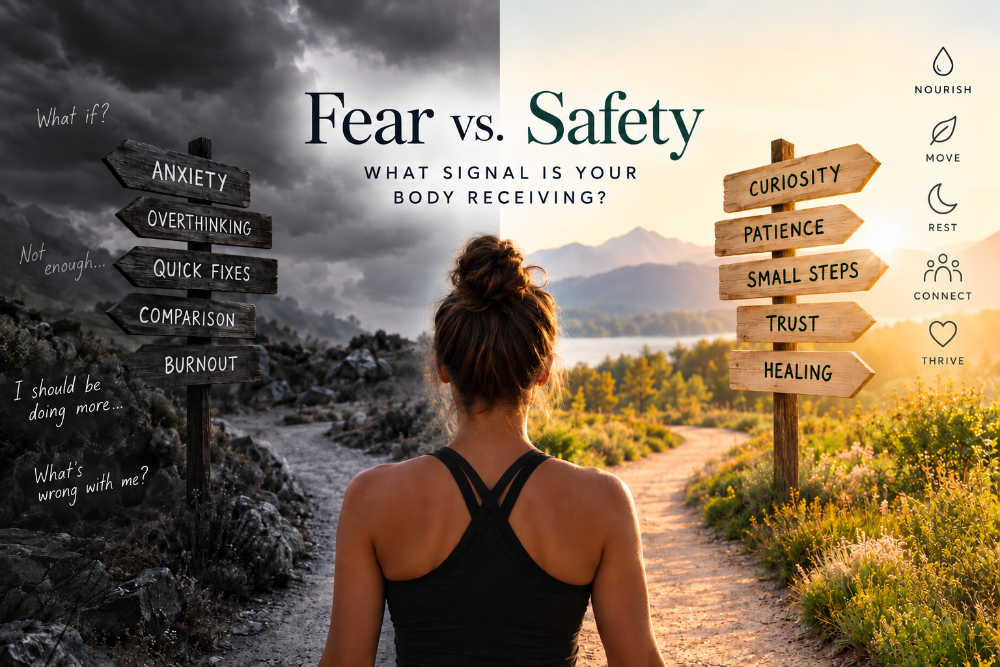
This makes complete sense when we understand how fear triggers threat signals in the nervous system, while curiosity activates the circuits of safety. Each response creates a radically different biological cascade affecting our physical body, mindset, emotions, and daily behaviors.
In my practice, I see this dynamic play out constantly. Let’s look at three examples of how these contrasting motivators can show up in daily life.
Example 1: The High Blood Pressure Diagnosis
Consider this common scenario: You go for your annual checkup, and your doctor tells you that your blood pressure is significantly elevated. They warn you that if you can’t get it down within three months, you’ll need to start medication.
Your goal is clear: lower your blood pressure. But how you approach that goal completely dictates your biological outcome.
- The Fear Response: You react with urgency and anxiety. You disappear down Google rabbit holes researching supplements, drastic diet changes, and strict rules for managing stress. You lose sleep worrying about cardiovascular risks and how to overhaul your entire lifestyle overnight.
- The Biological Result: This panic activates the sympathetic nervous system (fight-or-flight). Stress chemicals (cortisol and adrenaline) are released, your heart rate increases, muscle tension ramps up, and your blood pressure rises even higher. Your brain perceives these physical changes and responds with further catastrophic thinking, black-and-white strategies, and self-criticism - beating yourself up for how you got here in the first place. This strategy frequently leads to discouragement and burnout.
- The Safety Response:You acknowledge the initial sting of health-related anxiety and frustration. You remember that changing too much at once triggers a brain threat response—so you choose a different path instead. You ground yourself in curiosity, patience, and a growth mindset as you gather reliable info and adopt 1–2 small changes at a time, giving your nervous system space to adapt. As you observe what has been happening, you notice recent overwork and physical inactivity; you slow down and reach out to an old hiking buddy to connect on the weekends.
- The Biological Result: This calm, steady approach activates the parasympathetic nervous system (rest and repair). Stress chemicals drop, allowing muscle tension to ease, heart rate to slow, and blood pressure naturally decreases. Perceived safety turns on the prefrontal cortex—stimulating creative learning, self-talk, and social connection while freeing up energy to sustain these habits long-term.
The Takeaway: The practical steps you take (nutritional changes, moving your body, and working on stress reduction) might look identical on paper. But the energy, intensity, and motivation behind them—urgency and anxiety vs. curiosity and support —make all the difference in whether your body can heal and if you can sustain those changes long term.
Example 2: Maintaining a Healthy Relationship to Wearables and Health Trackers
A classic modern example of where fear sneaks in is how we interact with health data and wearables (Apple Watch, Garmin, Oura Ring, Whoop Band, or Continuous Glucose Monitor). While these devices offer useful feedback on heart rate variability (HRV), step counts, sleep, recovery scores and blood sugar levels, they can easily fuel health anxiety if we let them dictate how we feel.
If you are working on improving your sleep, notice how you approach your morning sleep score:
- The Fear Response: You wake up, grab your phone, and check your sleep score. It says you had poor REM and deep sleep. You quickly feel anxious, worrying about how much you have to do and how exhausted you're going to be all day. You've just handed your physiology and your peace of mind over to some data points.
- The Safety Response: You wake up and before looking at any screen, you check in with yourself intuitively. How does my body feel? What is my energy like? After acknowledging your own internal signals, you check the device for the data—and interpret it as data rather than absolute truth. If you slept poorly, you make some minor adjustments to your day or workout to give you some room for recovery without the panic.
- Tip for Wearables:
- Run a Mini-Experiment: Use your tracker temporarily to gather baseline data. Adjust one or two habits and observe both your numbers and your body's physical feedback.
- Build Intuitive Awareness: Pay attention to how a "good" vs. "poor" sleep score actually feels in your body so you can recognize quality rest without needing a device to confirm it.
- Take Tracking Breaks: Periodically set your device aside. Taking breaks from daily tracking stops your brain from scanning for threats and micromanaging your health, giving your nervous system space to rest. Notice if devices support you or give you more anxiety, then decide how much to use them.
Example 3: The Health Optimization and Longevity Trap
Recently, social media and podcasts have taken the fear-based tactics of diet culture and rebranded them into "health optimization" and "longevity." If you feel anxious or overwhelmed after scrolling through conflicting content about must-have supplements to prevent dementia, cold plunges to heal your anxiety, or strict food or workout rules to regulate your hormones, remember: these industries profit off your confusion and consumerism.
Chasing the latest in health trends and "hacks" is a subtle trap. While taking in new health research can be profoundly helpful, consuming endless information delivers quick dopamine hits that create an illusion of progress. In reality, it distracts you from building true internal motivation—and keeps you from sticking to simple, proven lifestyle habits long enough to actually see results.
- The Fear Response: You jump from one trend to the next, second guessing your choices. This leaves you overwhelmed and disconnected from your body. You focus on avoiding bad outcomes vs. building sustainable health practices.
- The Safety Response: You step back from the noise and anchor yourself in foundational principles you already trust. You filter advice through a practical lens and give a new intervention or approach time to discern if it works or not for you. You make decisions motivated from a place of self trust vs. anxiety.
The Truth of Healing
There are no quick fixes or magic supplements for long-term health. Real healing happens when your daily habits and thoughts signal safety to your nervous system. When you commit to simple, consistent foundations—nourishing whole foods, quality sleep, regular movement, and intentional downtime—your body can finally quiet chronic inflammation and tap back into rest and repair mode as well as vitality for life.
Tuning In: Signs of Fear vs. Safety
Recognizing how these signals may show up in your body and mind is the first step toward shifting them.
Signs of Fear (Threat) Physiology:
- Body: Muscle tension, pain, gut issues, poor sleep quality, shallow chest breathing, elevated heart rate or blood pressure, "wired and tired" energy or fatigue.
- Mind: Fast or ruminating thoughts, urgency ("I should be better by now"), catastrophic thinking ("What if I have to have surgery?"), worry, or black-and-white rules ("I have to do this diet or physical therapy regimen perfectly or it won't work").
Signs of Safety Physiology:
- Body: Healthy muscle tone, diaphragmatic breathing, healthy gut function, quality sleep, regulated heart rate and blood pressure, and sustained energy.
- Mind: Curious, open, and adaptable thinking; compassionate self-talk. Views setbacks as data rather than failure and leaves room to celebrate small wins.
Returning to the Key Pillars of Health
What truly shifts the brain out of threat and into safety isn't trendy, complex, or glamorous—it is deeply foundational. We return to safety when we prioritize the core pillars of physical health with a growth mindset and an energy of support.
Physiological Regulation includes:
- Adequate Hydration
- Anti-Inflammatory & Whole Food Nutrition
- Intentional Movement
- Sleep & Recovery
- Social Connection & Community
As you return to your routines this month, notice the motivation behind your habits. If you catch yourself operating from urgency or fear, pause, take a deep breath, relax your body, and ask yourself: "How can I reframe how I am approaching this with less urgency, and more curiosity?"
Join the Vitality Community
Are you looking for more support and energy from an amazing community of people doing this very thing? Please join us in the Vitality Community. We take a steady, yet deeply impactful, approach to building healthy lifestyle habits to improve our health and well-being. This month, we kick off a 3-month focus: The Regulation Reset - where we will break down Physical Regulation in September, Mental Regulation in October, and Emotional Regulation in November. Integrating these three regulation pillars shifts your body out of stress chemistry and into deep nervous system safety—creating the foundation for true healing, vibrant health, and sustainable change. Our next call is Tuesday, September 8th @ 6PM MT.
